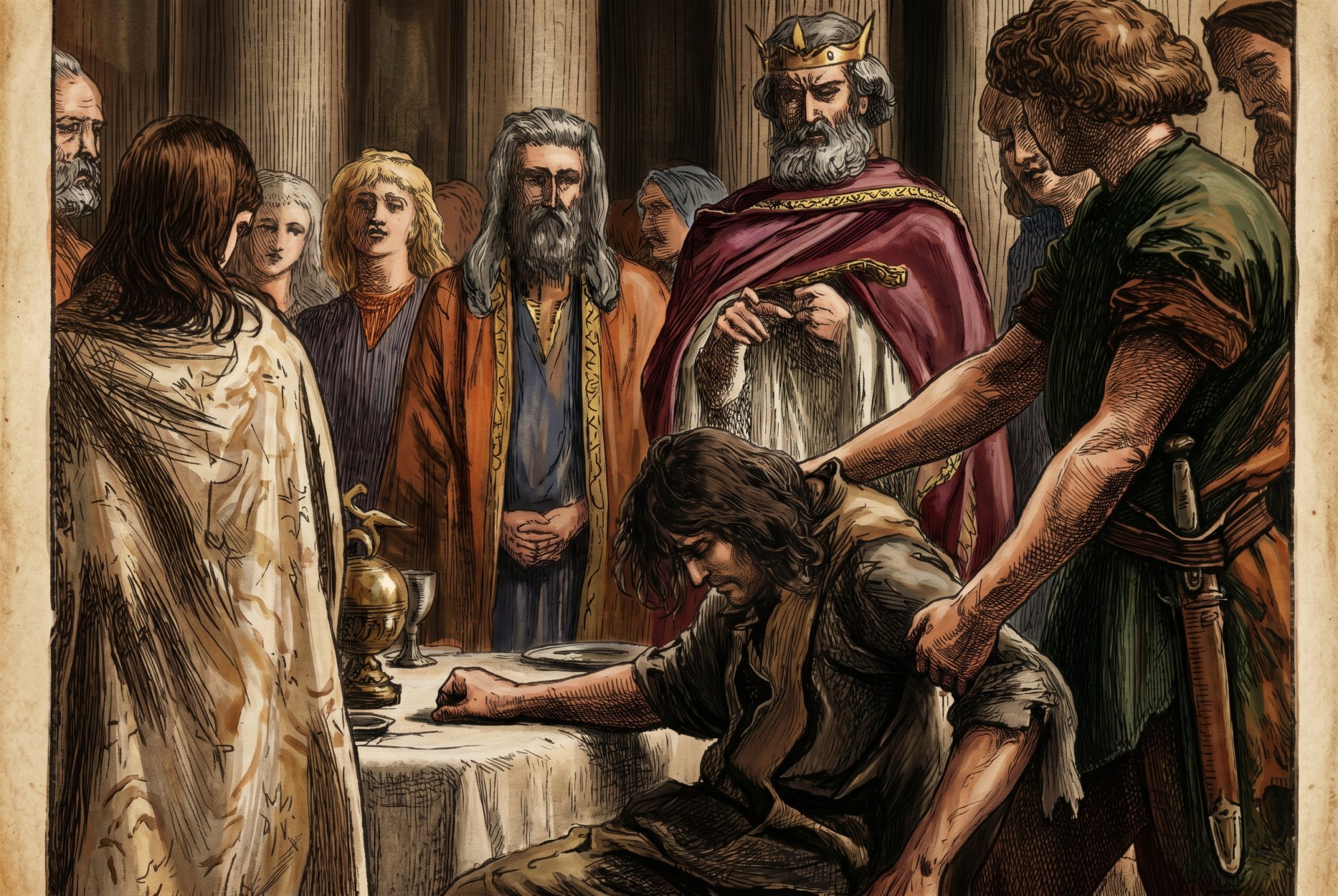
In Matthew 22, a king brings people off the streets for a wedding banquet and later throws a guest out for not wearing proper attire. Christians have all heard the story, and when you first heard it, your initial reaction was probably confusion. Why would the king throw out someone for not being dressed for a wedding when he was called in off the street?
When a Bible passage seems to go against the justice and mercy that Jesus taught, be curious enough to look deeper. In this case, you cannot derive the true meaning from the text itself. The author never wrote the cultural backstory. This is one of those times you must look outside the Bible to come to the correct interpretation.
In the first century, when the Gospels were written, it was customary in the ancient Middle East for hosts of royal banquets to provide festal garments for their guests upon arrival. When guests reached the king's door, servants supplied the appropriate robes so that everyone, rich or poor, would be dressed honorably for the occasion. Therefore, the improperly dressed man would have been presented the garment when he entered the house. The fact that he was inside the banquet hall without the garment meant he had refused it.
Key insight: The man wasn't expelled for being poor or unprepared; he was expelled for intentionally refusing the garment freely offered to him at the door.
In that light, we can see the king was actually merciful. He didn't immediately throw the man out. He first gave him a chance to explain why he was not dressed properly, or more correctly, why he had refused the garment offered to him. The man had nothing to say. His silence indicated a willful disdain for his host—he wanted the king's feast but refused the king's conditions. You can see why the man was tossed out, and why the king was justified in doing so.
Naturally, the story is about much more than dressing improperly. The Church teaches that the wedding garment represents the state of grace required to enter Heaven.
While the invitation to the feast—that is, salvation—is extended freely to everyone, both "good and bad," accepting the invitation requires a response. In Catholic theology, simply showing up is not enough. The garment symbolizes the transformation of the heart and the righteous deeds that must accompany faith. It represents having one's life "clothed" in Christ through baptism and maintaining that state through a life of active love and charity.
To arrive without the garment represents the presumption of accepting God's invitation without the willingness to change one's life or adhere to His will. It is faith without the necessary works of love.
Ultimately, this parable is one example of why we cannot simply read the Bible and interpret it ourselves. Some passages are self-evident, such as "love thy neighbor." But many, like "the eye of the needle," or Jesus telling a man to "let the dead bury their dead," can leave you confused or possibly defending an idea the Church doesn't teach.