On February 11, 1858, fourteen-year-old Bernadette Soubirous left her family’s home with her younger sister Toinette and a friend to gather wood near the Gave River in Lourdes, France. The Soubirous family had once lived at the Boly Mill, where Bernadette’s father worked as a miller, but a series of hardships had left them in severe poverty. By 1858, the family was living together in a single damp room in a former jail known as the Cachot. Bernadette suffered from asthma, had received little schooling, could not read or write, and was still trying to prepare to make her First Communion.
When the girls reached the grotto of Massabielle, Bernadette remained behind as the other two crossed a stream. As she removed her stockings to follow them, she heard a sound like a gust of wind and saw a Lady in an opening of the rock. Bernadette described her as wearing a white dress and veil, a blue sash, and a yellow rose on each foot. She began to pray the Rosary, while her companions saw and heard nothing unusual.
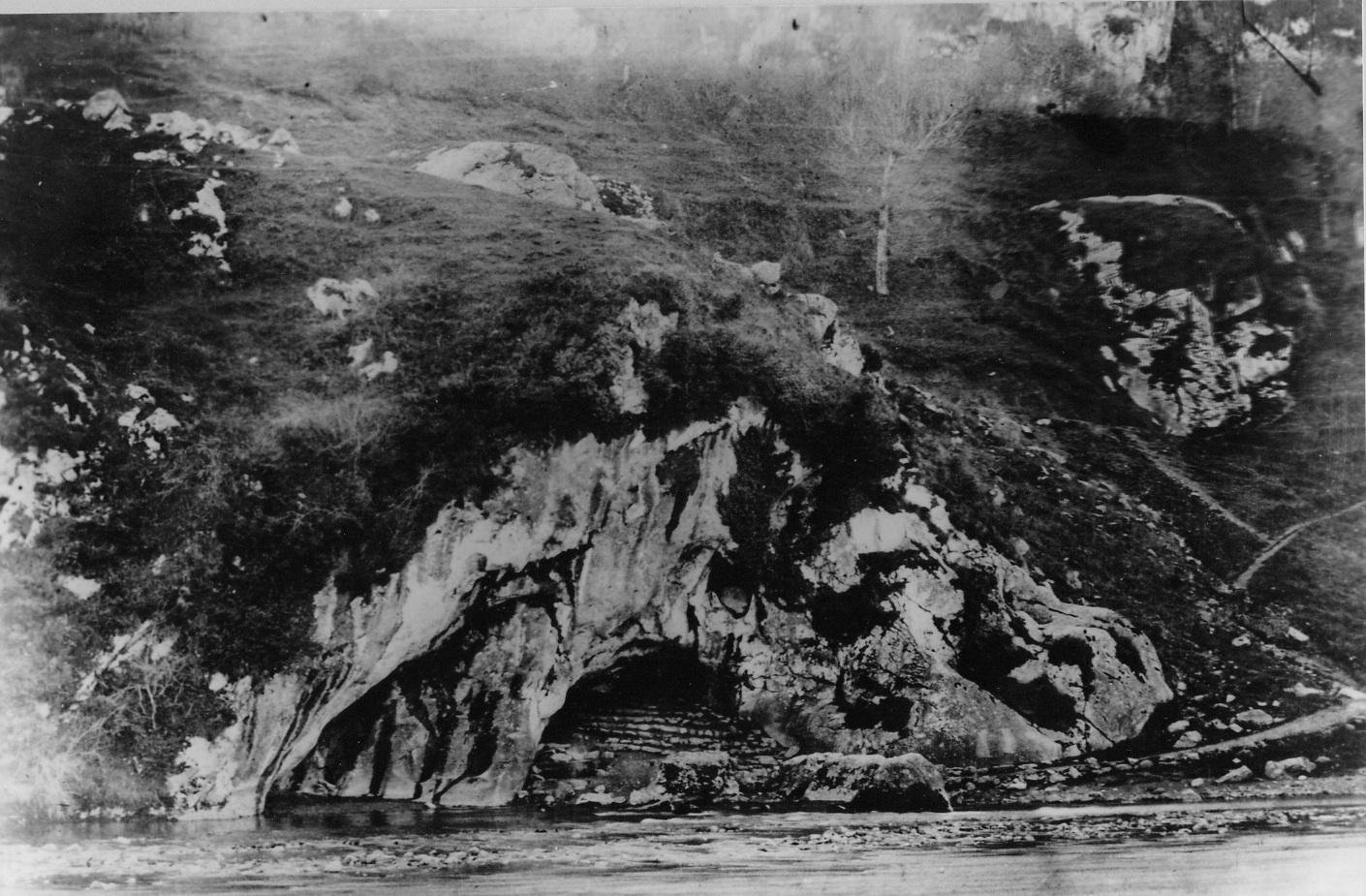
The Grotto of Massabielle
Bernadette did not immediately identify the Lady as the Blessed Virgin. She referred to her by the local word Aquerò, without giving her a name, and she reported only what she had seen. When she returned to the grotto on February 14, she sprinkled holy water toward the apparition, fearing it might be from the devil. The Lady simply smiled and did not disappear. During the third apparition, on February 18, the Lady spoke for the first time and asked Bernadette to return each day for a period of fifteen days.
News spread quickly, and the number of people following Bernadette to the grotto grew from a few companions to several thousand. Police Commissioner Dominique Jacomet and other civil authorities questioned her repeatedly, while some officials threatened her with imprisonment and tried to prevent people from visiting the grotto. Bernadette did not try to persuade anyone that the apparitions were real; she continued to give the same account of what she had seen and heard.
On February 24, the Lady called for penance and prayer for sinners. The following day, she told Bernadette to drink from a spring and wash herself there, but Bernadette could find no visible stream of water. She dug into the damp ground, and after several attempts she was able to drink the muddy water that collected. Her actions confused many of the people watching, but the water gradually cleared and continued to flow. Reports of cures connected with the spring began soon afterward.
On March 2, the Lady instructed Bernadette to tell the priests that people should come to the grotto in procession and that a chapel should be built there. The parish priest, Father Dominique Peyramale, remained cautious and asked Bernadette to learn the Lady’s name. Bernadette asked several times without receiving an answer, but during the sixteenth apparition on March 25, the Lady said in the local dialect:
“I am the Immaculate Conception.”
Our Lady of Lourdes · March 25, 1858
Bernadette did not understand the words and repeated them to herself as she hurried to the rectory so that she would not forget them. Father Peyramale understood their meaning. Pope Pius IX had formally defined the dogma of the Immaculate Conception only four years earlier, on December 8, 1854. The title referred to Mary’s preservation from original sin from the first moment of her conception.
Two more apparitions followed. The eighteenth and final apparition took place on July 16, after the authorities had blocked access to the grotto. Bernadette remained across the river and saw Our Lady from there. On July 28, the Bishop of Tarbes established a commission to investigate Bernadette’s testimony, the events at the grotto, and the reported cures. After nearly four years of investigation, Bishop Bertrand-Sévère Laurence declared the apparitions worthy of belief on January 18, 1862.
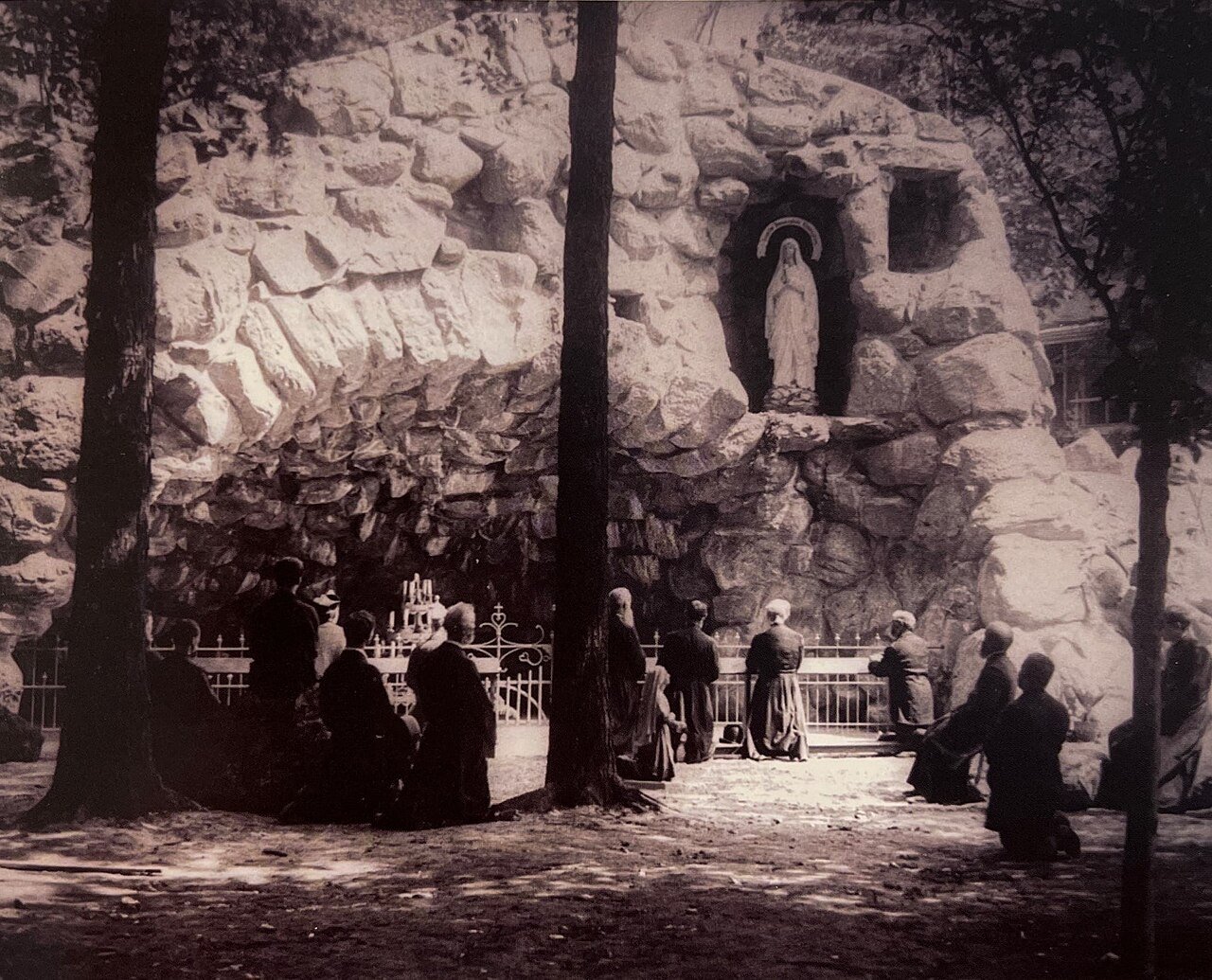
Pilgrims praying near the Grotto of Massabielle.
Bernadette made her First Communion on June 3, 1858, while the apparitions were still taking place. In 1866, she left Lourdes and entered the Sisters of Charity and Christian Instruction at Nevers, where she received the religious name Sister Marie-Bernard. She remained in poor health and died on April 16, 1879, at the age of thirty-five. Pope Pius XI canonized her on December 8, 1933.
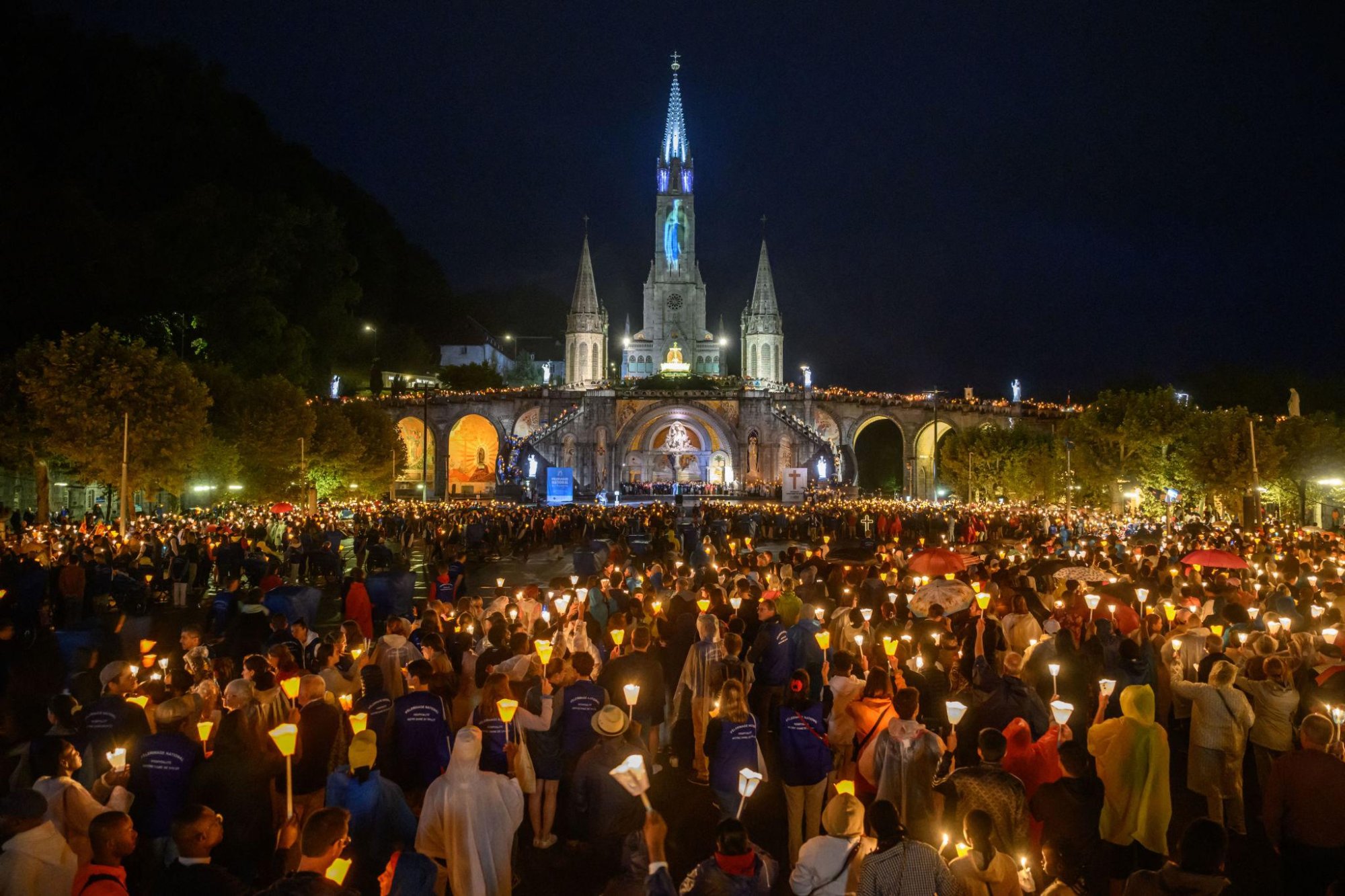
The sanctuary that developed around the grotto continues the practices requested during the apparitions. Pilgrims pray the Rosary, take part in processions, and drink or wash in the water from the spring, while the sick are brought to Lourdes for prayer and care. Thousands of cures have been reported, and the Church has formally recognized more than seventy of them.