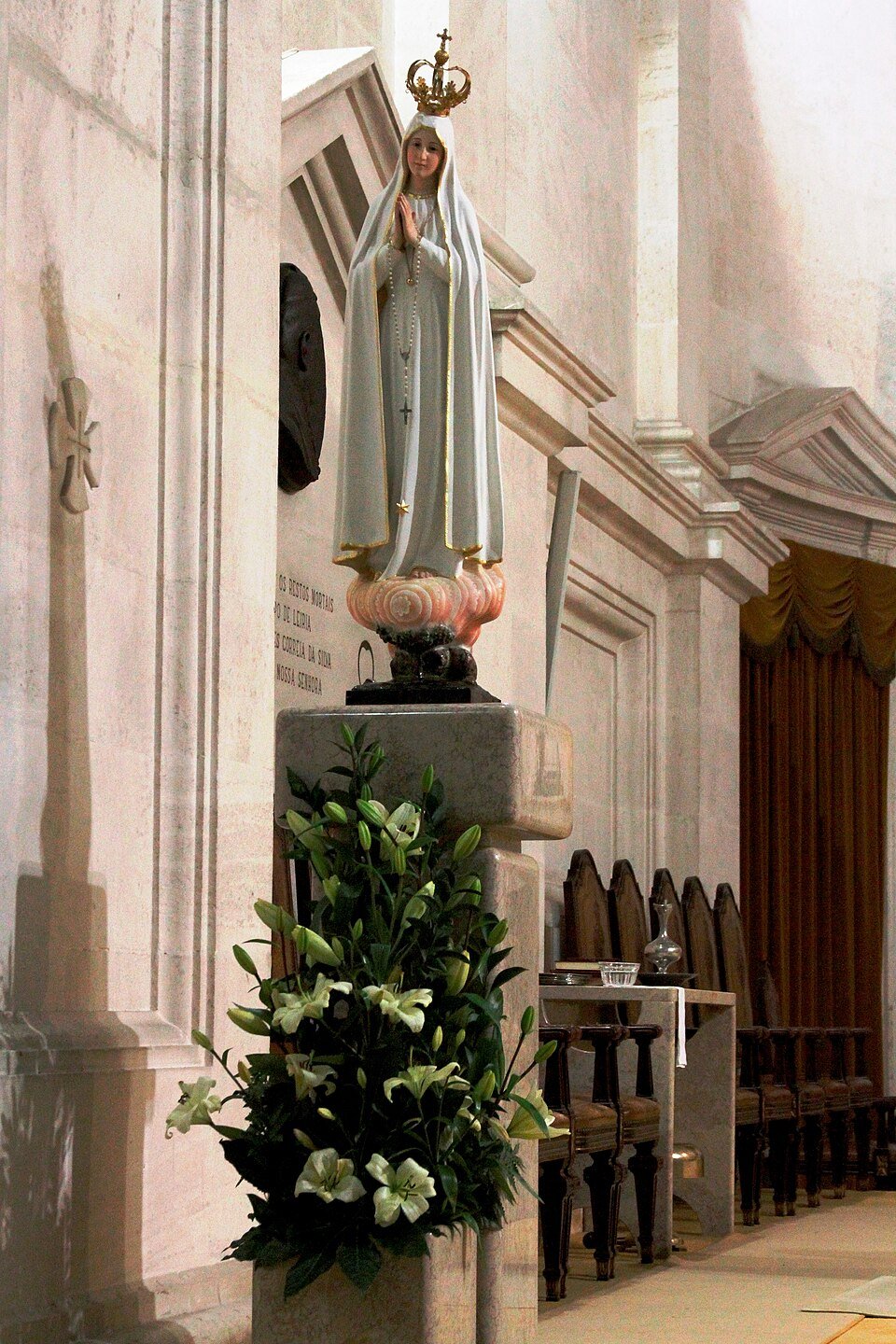
On May 13, 1917, ten-year-old Lúcia dos Santos and her cousins Francisco and Jacinta Marto, ages eight and seven, were tending their families’ sheep at the Cova da Iria near Fátima, Portugal. After seeing what they described as a flash of light, they saw a Lady dressed in white standing above a small holm oak. She told them that she came from Heaven and asked them to return on the thirteenth day of each month until October.
The children had already experienced something unusual during the previous year. In 1916, an angel appeared to them three times, identifying himself as the Angel of Peace and later as the Angel of Portugal. He taught them prayers of adoration and reparation and urged them to pray and make sacrifices for sinners. During his final appearance, he gave them Holy Communion.
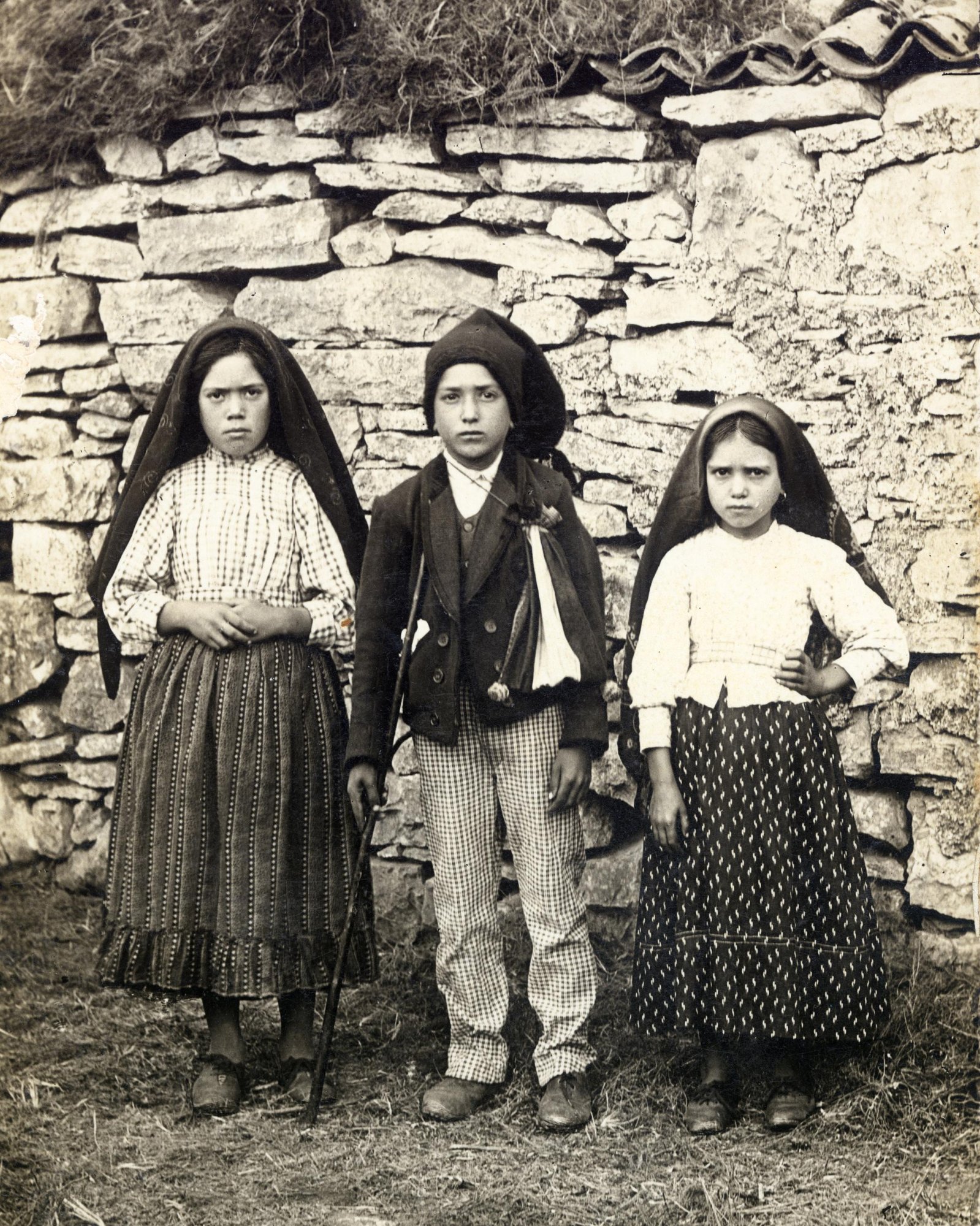
The Three Shepherd Children of Fátima, 1917. Photograph by Joshua Benoliel.
At the first apparition of Our Lady, she asked the children whether they were willing to offer themselves to God and accept the sufferings He permitted them to undergo in reparation for sin and for the conversion of sinners. They agreed, and she gave them the request that would be repeated throughout the apparitions:
“Pray the Rosary every day, in order to obtain peace for the world and the end of the war.”
Our Lady of Fátima · May 13, 1917
As news spread, increasing numbers of people accompanied the children to the Cova da Iria, although the crowd could not see Our Lady. Lúcia spoke with her, Jacinta saw and heard her, and Francisco saw her but could not hear what she said. During the June apparition, Our Lady told the children that Francisco and Jacinta would soon go to Heaven, while Lúcia would remain longer. She also spoke of her Immaculate Heart and assured Lúcia that it would be her refuge.
In July, Our Lady showed the children a vision of hell and entrusted them with what became known as the Secret of Fátima. She warned of war and persecution if people did not cease offending God, and she asked for the conversion of sinners and devotion to her Immaculate Heart. She also said that she would later return to ask for the Communion of reparation on the First Saturdays. The details of that request were given to Lúcia years later, at Pontevedra in 1925, rather than during the six apparitions at Fátima.
The children were prevented from going to the Cova da Iria on August 13. The local civil administrator took them to Ourém, where they were detained and questioned for several days in an effort to make them reveal the secret. After their release, Our Lady appeared to them on August 19 at Valinhos, near their village. She again asked them to pray and make sacrifices for sinners, and she promised that a miracle would take place in October so that others would believe.
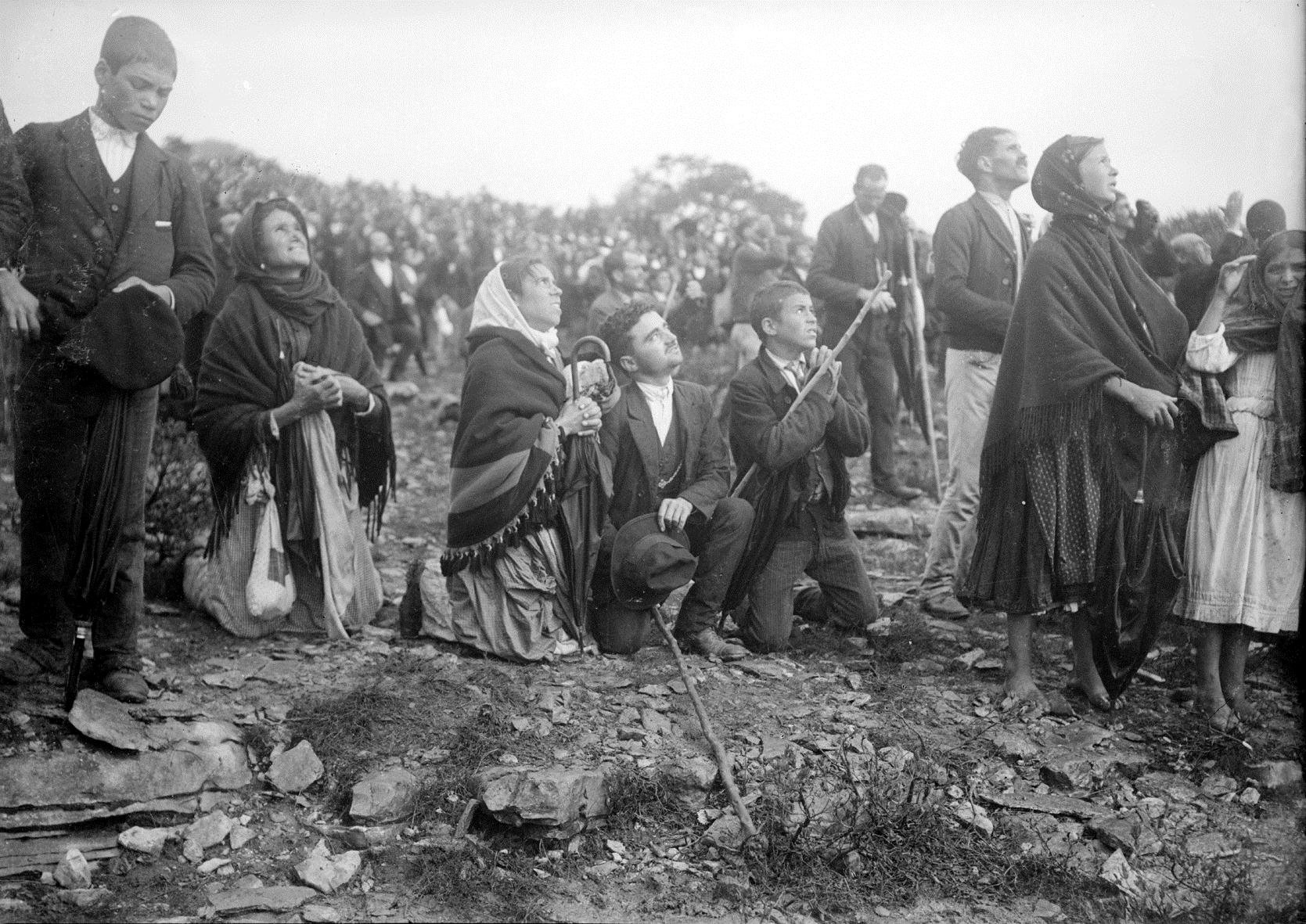
The crowd on October 13, 1917. Photograph by Judah Bento Ruah.
On October 13, a crowd estimated at about seventy thousand had gathered at the Cova da Iria despite heavy rain. During the apparition, the Lady identified herself as Our Lady of the Rosary, asked that a chapel be built there in her honor, and again called for the daily Rosary. The crowd then witnessed what became known as the Miracle of the Sun. Many observers reported that the sun appeared to spin, cast different colors across the ground, and plunge toward the earth before returning to its usual position. A report describing the event appeared two days later in the Lisbon newspaper O Século.
Francisco and Jacinta both became ill during the influenza epidemic that followed the war. Francisco died at home on April 4, 1919, at the age of ten, and Jacinta died in a Lisbon hospital on February 20, 1920, at the age of nine. Lúcia later entered the Sisters of Saint Dorothy and then the Carmel of Saint Teresa in Coimbra. She wrote several memoirs describing the apparitions and the lives of her cousins, and she died on February 13, 2005, at the age of ninety-seven.
After a formal investigation, the Bishop of Leiria declared the apparitions worthy of belief on October 13, 1930. Pope Francis canonized Francisco and Jacinta at Fátima on May 13, 2017. The requests made at Fátima remain straightforward: repentance, the daily Rosary, prayer and sacrifice for the conversion of sinners, peace in the world, and devotion to the Immaculate Heart of Mary.